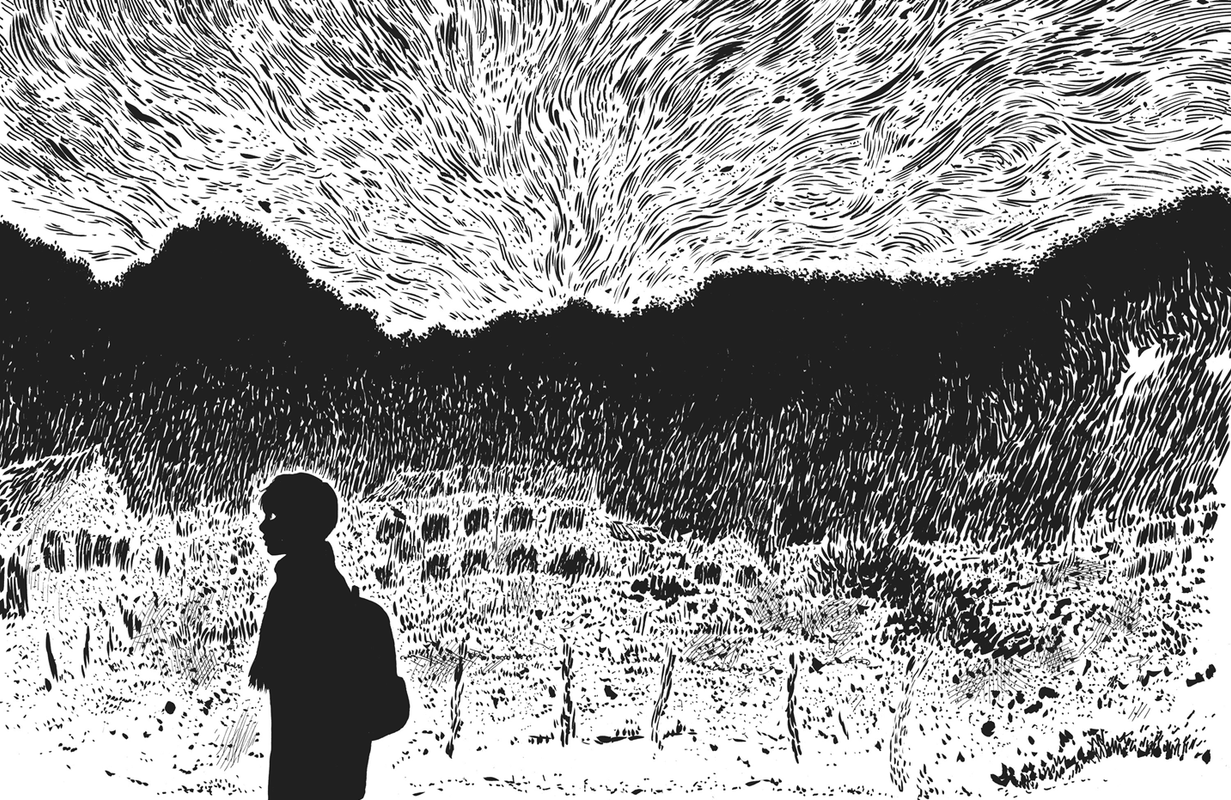
Then, he wondered. Where did that whirlwind of hatred that had enveloped me go? It seemed to him that he had lost something, as if a part of his body was no longer there. He had been living together with that hatred all along. Holding on to it at all times.
A Short, Insignificant Premise
This is an unorganized stream of consciousness, and I present it as such.
This is not a review, there’s plenty of those around the web you can freely read.
To critique this manga would only clutter its simplicity. I prefer to let its power stand, unbutchered and untouched by analysis, fueled by raw emotion alone.
This article is uniquely about appreciation and honesty.
Survival by Storytelling
I’ve recently finished what might be one of the most compelling and gut-wrenching manga of the last decade. A truly atypical masterpiece.
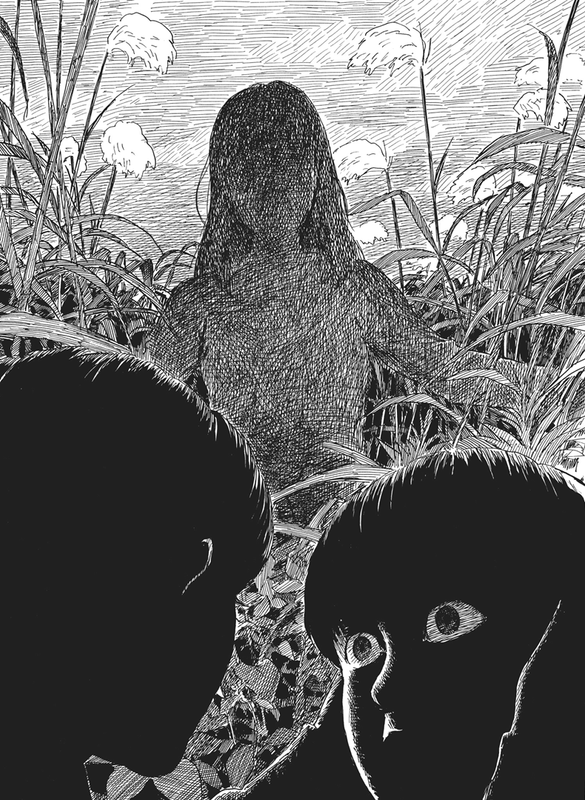
As the title of this article suggests, it’s Blood on the Tracks (Chi no wadachi) by Shuzo Oshimi, a Japanese mangaka primarily known for his intense psychological dramas and unsettling explorations of adolescence, human relationships, and social alienation.
It narrates a story about abuse, identity, loss, trauma, resentment and humanity with a straight-forward, yet powerful and impactful narration.
Above all, it speaks of forgiveness.
More than just a piece of media, its autobiographical nature elevates the opus, vividly capturing one of humanity’s most insufficiently explored topics. By the author’s own admission, this manga was created out of a need for ”survival”, a way to cope with a long-standing inner conflict and past traumas. Of course, it’s still fiction, but the narrative Oshimi decided to adopt tells us much of it is viscerally personal.
Thank you for reading to the end. I started this story determined to depict only what I really needed to depict, and I wanted to keep drawing only that until the end, without adding anything superfluous. If I had stopped halfway, I might not have been able to get up again, so I definitely wanted to get to the end. Fortunately, I had many readers, and after six years of serialization, I was able to put the pen down when I felt that I had exhausted what there was to write. This was a blessing for me, but also a cruelty to the real people I included in this manga. I regret having drawn it. I did it for my own survival. However, it will continue to exist as a work, as a story. Whether it will be read for years to come, or instead will soon fade into oblivion, will be determined by each of you readers. I leave it all in your hands. […] Also to my mother and father, to my brother, who passed away shortly after the publication of the first volume, to my relatives, A.F., with whom I was in love when I was in middle school, to Kiryu, my hometown… I apologize. Thank you.
Oshimi’s writing is tender as a lullaby, agonizing as salt poured on an open wound.
It’s distressing yet ultimately cathartic.
Fragmented Self
It comforted me.
It strangely consoled me in a sense, despite the gruesome and desperate events it portrays.
There’s something about this work that resonated with me more than most media I get exposed to.
I felt a wide range of emotions, totally inhabiting Seiichi’s point of view. I was sad, terrified, and encaged.
My empathy for all the characters created an intense internal conflict; I felt there, amongst them, a silent witness to their nightmare and tragedy. I underwent a temporary loss of self, dissolving for a couple of hours into the higher collective consciousness, both ours and the one the narrative managed to evoke. I saw how subtly our perceptions are shaped by external, unnoticed influences. It laid bare the frailty of our existence, an extemporaneous, fleeting moment in the grand scheme of things.
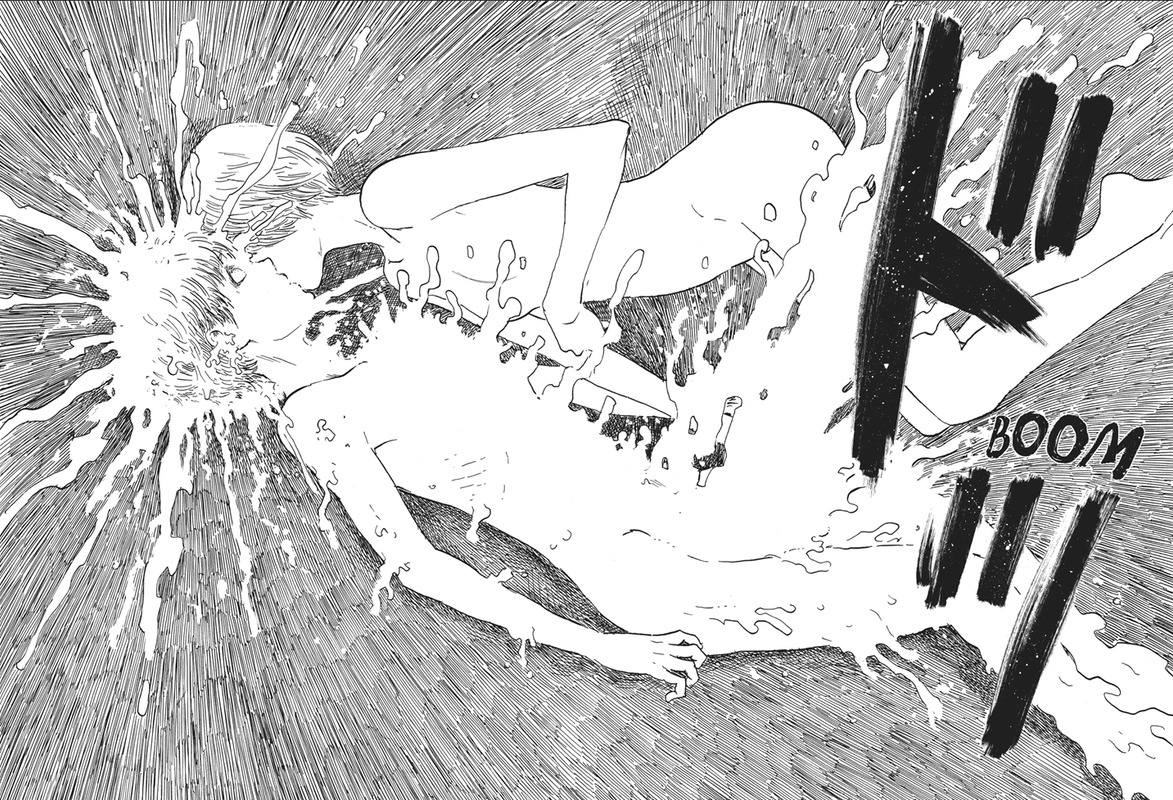
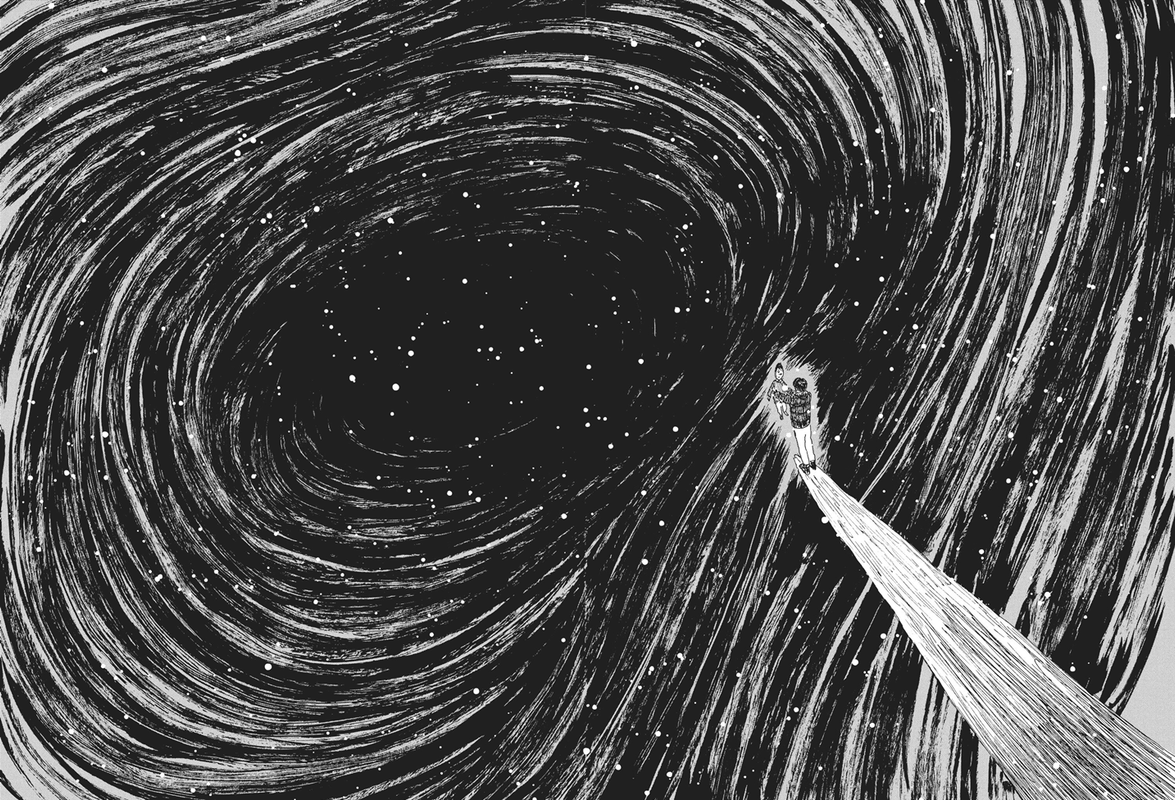
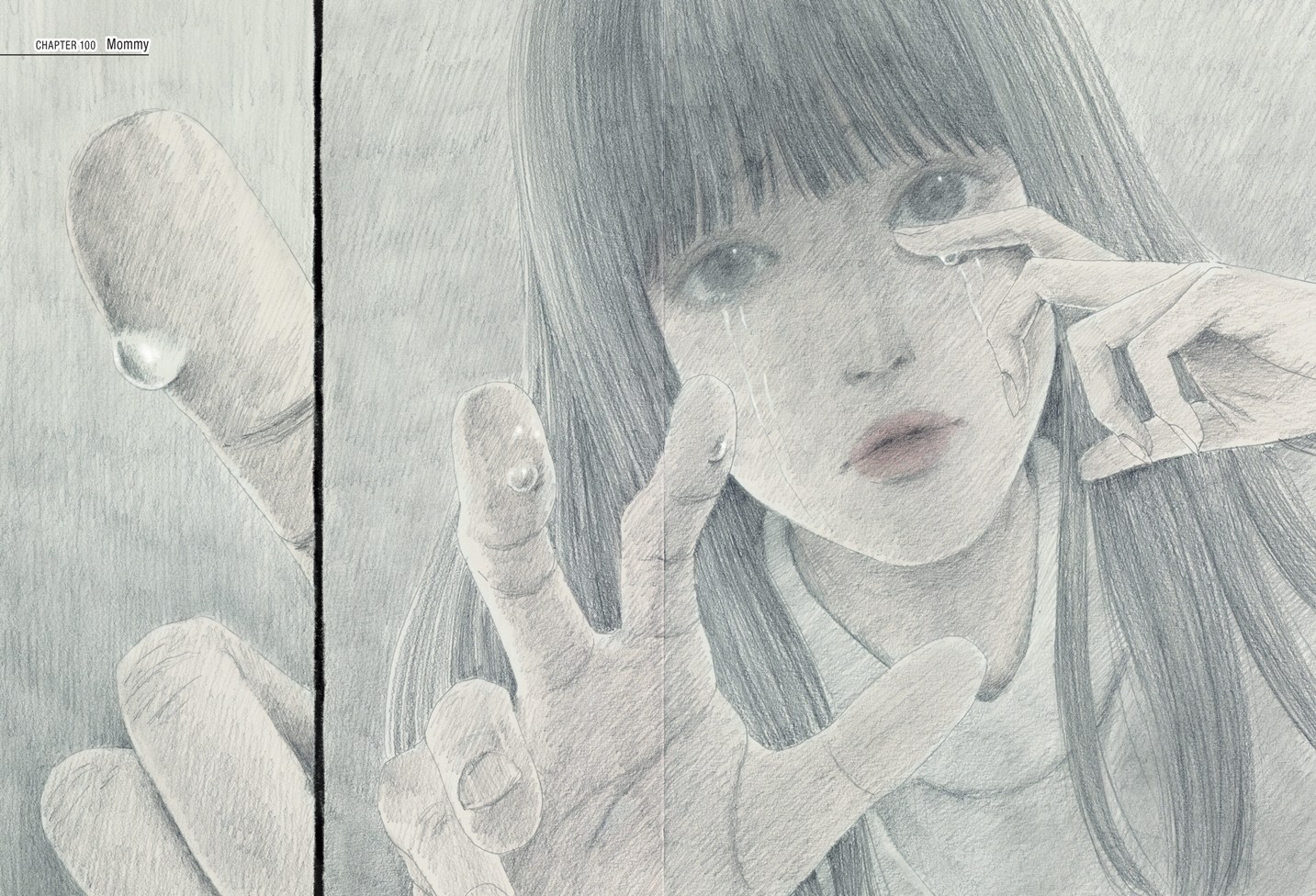
I found myself pondering death’s inevitability, and the profound sorrow of witnessing those closest to us fade into nothingness.
Or the tragedy of senility, the cruel fate of living a long life, a tapestry woven with events outside our control, letting those same events control you. Desperately clinging to fading memories of what was, what it meant to us, how much we’re willing to forgive and what could ultimately set us free, avoiding the sad prospect of nurturing a rancor so wrathful it consumes our very soul.
Most of all, my thoughts turned to the crucial ties with family, recognizing that this core relationship defines our sensibility, constructs our personality, and dictates our fundamental approach to the world.
Blood on the Tracks deals with the delicate desire for an identity of our own that transcends the relationship with our loved ones. In particular, this very desire is embodied by the protagonist, whose fragile reflection is just a fragment of his own mother’s self. He perpetually struggles to break those chains and forge an identity separate from the influence of his mother.
I cannot recommend this highly enough.
